Insomnia and sleep apnea: treating both
Did you know that 30-50% of people living with sleep apnea may experience symptoms of chronic insomnia?
Published on
9 minutes
- Sleep apnea
- Value based healthcare

Insomnia and obstructive sleep apnea (OSA) are the most common sleep disorders1 and can occur simultaneously. While long-term insomnia can hamper compliance with sleep apnea treatment, thus reducing its benefits, early diagnosis of both disorders is the first step towards better management. Indeed, treatment of chronic insomnia improves the use of the medical device used for long-term sleep apnea treatment by 1 hour per night2, compared with sleep apnea treatment alone, with the outcomes of improved quality of life for the patient3.
|
|
With Dr Alexander Sweetman, PhD,
Senior Research Fellow at the University of Western Australia
we will explore the COMISA condition
|

Insomnia and sleep apnea: an under-diagnosed medical condition despite serious impacts on patients' quality of life4
Known as COMISA, it refers to the co-occurrence of insomnia and sleep apnea in the same person. For a long time, these two disorders were considered to be totally distinct, each with its own symptoms, risk factors, specific consequences and treatments. Their management is also carried out by different specialists, frequently pneumologists for sleep apnea and psychologists or psychiatrists for insomnia. We now know that sleep apnea and insomnia are often associated and need to be considered together for better health outcomes for patients.
- 3-4 out of every 10 people suffering from insomnia also have sleep apnea4
- For every 10 people with sleep apnea, 3-5 also live with chronic insomnia4
Awareness of COMISA needs to be raised further, as its diagnosis often occurs late. It is mainly diagnosed when a patient with sleep apnea has poor compliance with their treatment, continuous positive airway pressure (CPAP) therapy.
How does Air Liquide Healthcare support people living with COMISA?
When the diagnosis of insomnia is confirmed, treatments are available. Cognitive-behavioral therapy for insomnia (CBTi) is considered to be the recommended treatment for chronic insomnia5. Other options might include short term medication (in specific cases), however it is important to note that some sleeping pills may exacerbate sleep apnea in some patients4. CBTi aims to identify and modify the thoughts and behaviors that contribute to insomnia. It includes techniques such as sleep education, cognitive therapy, bedtime restriction, stimuli control and relaxation. Treating the underlying behaviors that cause insomnia, CBTi is effective in people with COMISA and leads to lasting improvements in sleep, daytime functioning, mental health and quality of life6. CBTi can be used in parallel with sleep apnea treatment, continuous positive airway pressure (CPAP)7. CPAP involves wearing a mask during sleep, connected to a device that delivers pressurised air. This pressure keeps the airways open and prevents obstructive apneas.
- CPAP improves insomnia symptoms in around 30-40% of COMISA8 patients. Note that insomnia may persist with CPAP8 treatment, as insomnia is not always caused by sleep apnea.
-
Effective treatment of insomnia can improve acceptance of CPAP treatment and long-term use by one hour per night compared to CPAP treatment alone2
Combining approaches to both sleep disorders to meet the needs of each patient
By making patients aware of the possible co-existence of insomnia and sleep apnea, we aim to facilitate the diagnosis of COMISA, and improve patient care and health outcomes. Working in partnership with the medical profession, Air Liquide Healthcare teams propose a combined approach to the two sleep disorders that meets the needs of each patient. Many people suffer from COMISA in silence, believing that their sleep problems are normal or unavoidable. We believe that personalised support, combined with a thorough understanding of the needs and health status of COMISA patients, is essential to enable them to achieve better outcomes.
Air Liquide Healthcare's takes a holistic approach for the benefit of patients and healthcare professionals. Our value proposition is to offer personalized support to patients living with sleep apnea and experiencing symptoms of insomnia. By treating insomnia, acceptance of sleep apnea treatment and therefore compliance can be improved2 and, ultimately, bring better outcomes that matter to patients.

How can we improve Comisa management?
Alexander Sweetman: Firstly, to increase recognition of Comisa, so providing and promoting different education resources on Comisa, both to healthcare providers and staff, as well as people and patients living with Comisa or people in the community. And the second is really to encourage multidisciplinary collaboration. So, we think to improve the management of Comisa throughout the health system, it’s not just a single setting or a single specialist area that needs to work on this. We think it will take collaboration between lots of different types of clinicians. So involving sleep and respiratory physicians, as well as behavioural sleep medicine providers, home care providers and a whole range of different people throughout the health system.
When insomnia and sleep apnea feed on each other
The link between insomnia and obstructive sleep apnea is complex and bidirectional.
Sleep apnea causes numerous micro-awakenings that disrupt sleep and can lead to insomnia. These awakenings are often so brief that the person is unaware of them, but they fragment sleep .
On the other hand, insomnia can aggravate obstructive sleep apnea. Indeed, sleep fragmentation and sleep deprivation can make breathing more difficult during sleep. In addition, reduced sleep time has an impact on the time required to use continuous positive airway pressure (CPAP), the medical device needed to treat obstructive sleep apnea.
The consequences of COMISA
The co-existence of insomnia and sleep apnea is frequent, and leads to more marked symptoms than in patients with either of these sleep disorders in isolation4:
Symptoms of OSA and insomnia can overlap

People with COMISA also have higher risks of hypertension and cardiovascular risks, as well as a 47% increased mortality risk compared to people without sleep apnea or insomnia9.
To resume
-
30-50 %
of people living with sleep apnea may experience symptoms of chronic insomnia1
-
30-40 %
of COMISA sufferers improve their insomnia symptoms8 with sleep apnea treatment, CPAP
-
1 hour
improved acceptance of CPAP treatment and long-term use with effective treatment of insomnia2
- COMISA means co-occurrence of chronic insomnia and sleep apnea in the same person. It is a frequent condition that is often diagnosed late. 30-50% of people living with sleep apnea may experience symptoms of chronic insomnia1.
- An effective treatment of insomnia can improve acceptance of CPAP treatment and long-term use by one hour per night compared to CPAP treatment alone2 and therefore outcomes as rest, mental health and quality of life3.
- Similarly, treating sleep apnea with CPAP improves insomnia symptoms in approximately 30 to 40% of people with COMISA4.
- Air Liquide Healthcare takes a holistic approach and are committed to supporting patients with COMISA to bring better outcomes that matter to people living with this condition.
- If you or someone you know might be impacted by COMISA, please speak to your healthcare provider about further assessment and diagnosis.
Let's return to the definition of sleep apnea and insomnia

Insomnia
Insomnia
Insomnia is a subjective complaint of poor sleep, diagnosed by a doctor. It is characterized by difficulty falling asleep, staying asleep, or waking up early in the morning, at least three times a week1. Restless nights often lead to daytime fatigue, irritability, and concentration problems. Insomnia can initially be triggered by various factors: physical problems such as chronic pain or sleep apnea itself, substance, psychological factors and even environmental factors. Insomnia can be temporary, lasting less than three months, or chronic, when it persists beyond this period. Chronic insomnia affects 10 to 15% of adults at some point in their lives.
Sleep apnea
Sleep apnea
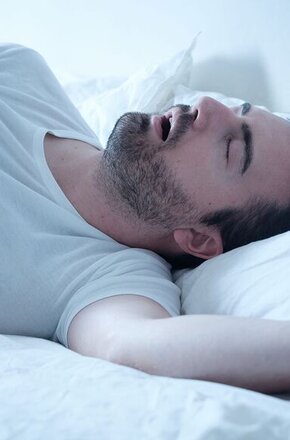
Obstructive sleep apnea (OSA) is characterized by repeated pauses in breathing during sleep. These pauses, which last at least 10 seconds, can occur dozens or even hundreds of times per night13. They are often accompanied by loud snoring, sudden awakenings with a feeling of suffocation, and non-restorative sleep. Sleep apnea is caused by the closure of the upper airway, usually due to soft tissue structures in the upper airway, and the relaxation of the muscles in the pharynx during sleep.
1.Sweetman A, et al. (2019). Co-morbid insomnia and sleep apnea (COMISA): prevalence, consequences, methodological considerations, and recent randomized controlled trials. Brain Sciences, 9(12), 371.
2. Sweetman A, Lack L, Catcheside PG, Antic NA, Smith S, Chai-Coetzer CL, Douglas J, O'grady A, Dunn N, Robinson J, Paul D, Williamson P, McEvoy RD. Cognitive and behavioral therapy for insomnia increases the use of continuous positive airway pressure therapy in obstructive sleep apnea participants with comorbid insomnia: a randomized clinical trial. Sleep. 2019 Dec 24;42(12):zsz178. doi: 10.1093/sleep/zsz178. PMID: 31403168.
3. Alessi CA, Fung CH, Dzierzewski JM, Fiorentino L, Stepnowsky C, Rodriguez Tapia JC, Song Y, Zeidler MR, Josephson K, Mitchell MN, Jouldjian S, Martin JL. Randomized controlled trial of an integrated approach to treating insomnia and improving the use of positive airway pressure therapy in veterans with comorbid insomnia disorder and obstructive sleep apnea. Sleep. 2021 Apr 9;44(4):zsaa235. doi: 10.1093/sleep/zsaa235. PMID: 33221910; PMCID: PMC8033453.
4. Sweetman A. Co-morbid Insomnia and Sleep apnea (COMISA): Latest Research from an Emerging Field. Current Sleep Medicine Reports. 2023;9(3):180-189.
5. https://aasm.org/digital-cognitive-behavioral-therapy-for-insomnia-plat… or Edinger JD, Arnedt JT, Bertisch SM, et al. Behavioral and psychological treatments for chronic insomnia disorder in adults: an American Academy of Sleep Medicine systematic review, meta-analysis, and GRADE assessment. J Clin Sleep Med. 2021;17(2):263-298. https://doi.org/10.5664/jcsm.8988
6. Riemann, D, et al. (2023). The European Insomnia Guideline: An update on the diagnosis and treatment of insomnia 2023. Journal of sleep research, 32(6).
7. Sweetman, A et al. (2023). The effect of cognitive behavioural therapy for insomnia in people with comorbid insomnia and sleep apnea: A systematic review and meta‐analysis. Journal of Sleep Research, 32(6).
8.Sweetman, A, et al. (2021). Bi-directional relationships between co-morbid insomnia and sleep apnea (COMISA). Sleep medicine reviews, 60, 101519.
9. Lechat B, Appleton S, Melaku YA, Hansen K, McEvoy RD, Adams R, Catcheside P, Lack L, Eckert DJ, Sweetman A. Comorbid insomnia and sleep apnea is associated with all-cause mortality. Eur Respir J. 2022 Jul 13;60(1):2101958. doi: 10.1183/13993003.01958-2021. PMID: 34857613.
10. Sweetman, A, et al. (2021). Bi-directional relationships between co-morbid insomnia and sleep apnea (COMISA). Sleep medicine reviews, 60, 101519.
11.Bastien CH, Vallières A, Morin CM. Precipitating factors of insomnia. Behav Sleep Med. 2004;2(1):50-62. doi: 10.1207/s15402010bsm0201_5. PMID: 15600224.
12. Ohayon MM. Epidemiology of insomnia: what we know and what we still need to learn. Sleep Med Rev. 2002 Apr;6(2):97-111. doi: 10.1053/smrv.2002.0186. PMID: 12531146
13. https://aasm.org/clinical-resources/international-classification-sleep-….